Your newborn takes 40 to 60 breaths per minute. Each one pulls air through developing lungs that won't fully mature for years.
We know what's hiding in your home's air because we see it every day.
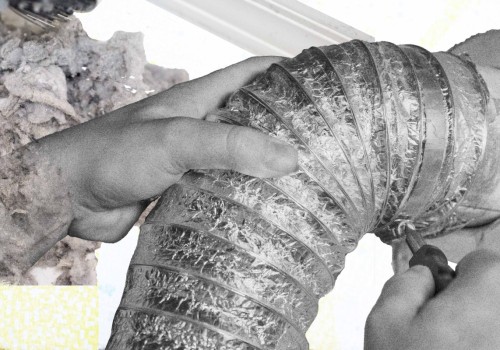
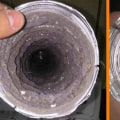
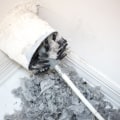
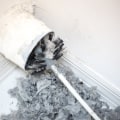
During dryer vent cleanings across Pembroke Pines, our technicians routinely extract lint mixed with dust mites, pet dander, fabric fibers, and mold spores—the same particles circulating through your HVAC system and into your nursery right now.
What surprises most parents? Homes with newborns often show heavier particle buildup. More laundry. More bedding changes. More airborne fibers feeding into ductwork with every load.
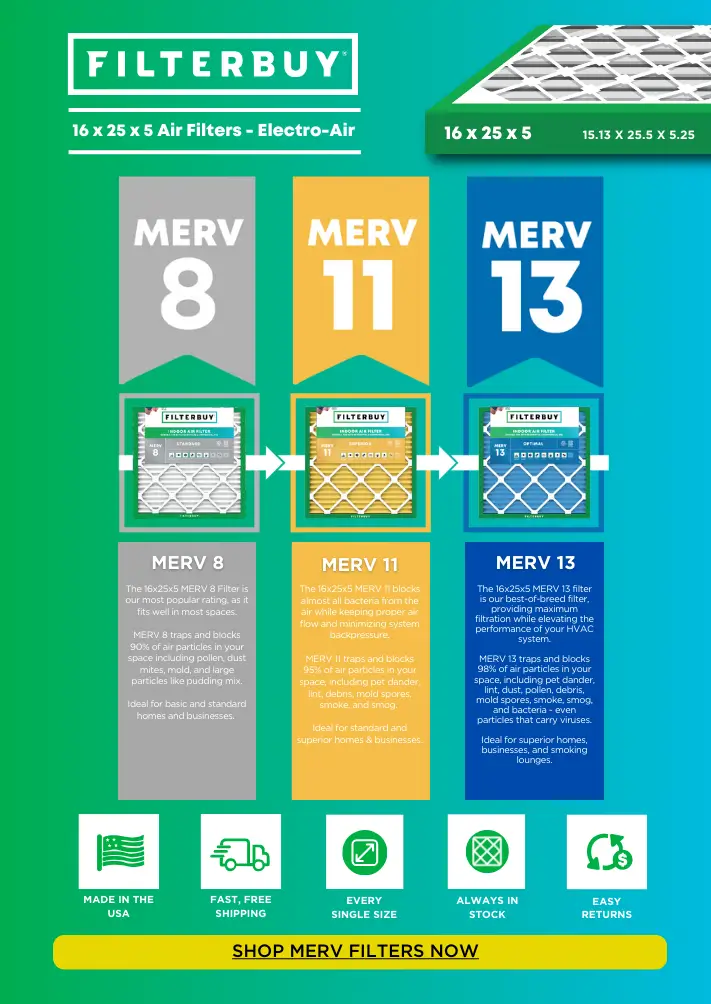
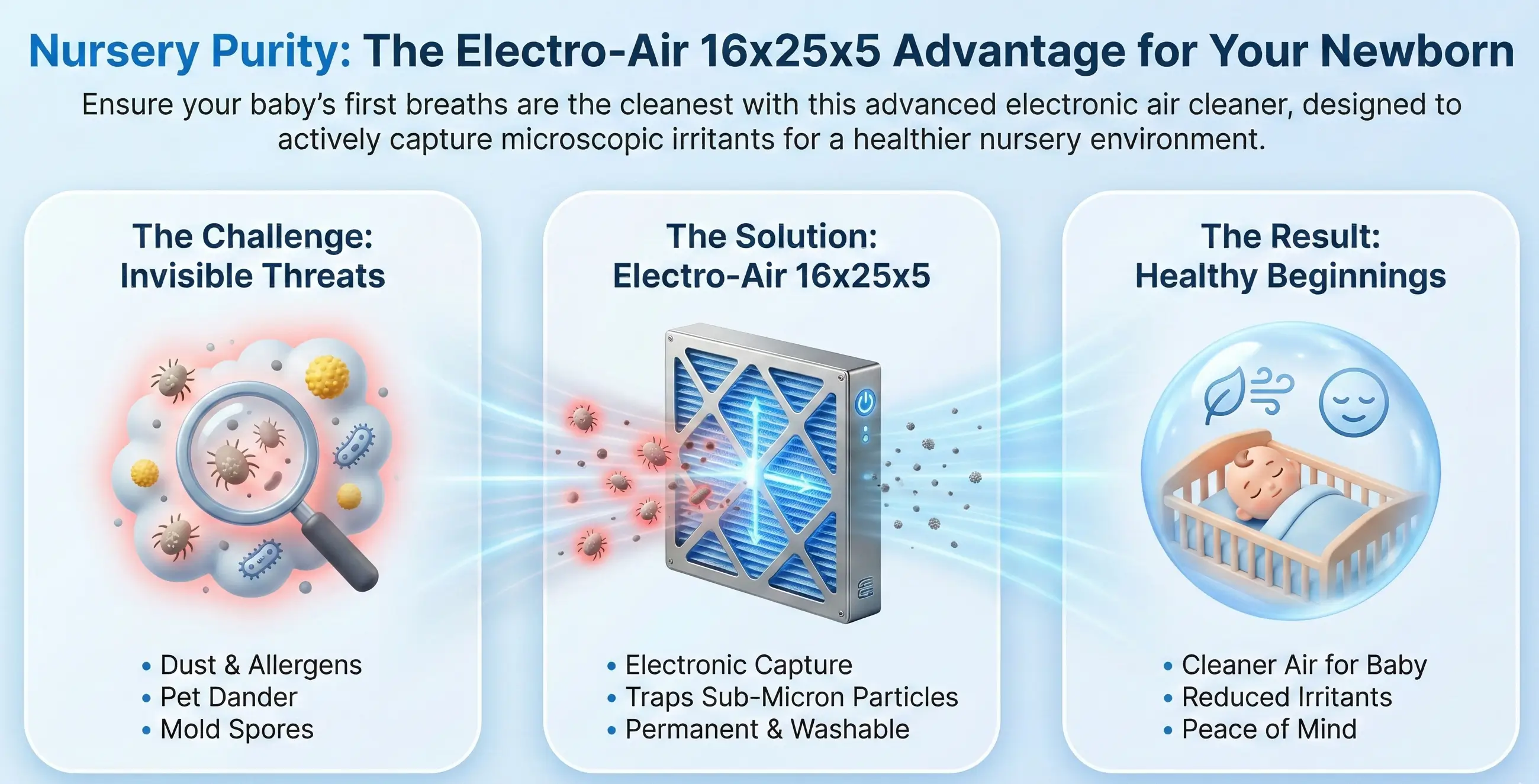
That's why we recommend the Electro-Air 16x25x5 air filters for nurseries. Its MERV 11 rating captures particles down to 1.0 micron—trapping the same contaminants we pull from dryer vents before they reach your baby's lungs.
This guide shares what our service calls have taught us about protecting nursery air quality—including proper filter installation, replacement timing based on real South Florida conditions, and why 5-inch media filters outperform the 1-inch options most homes use by default.
Quick Answers
Electro-Air 16x25x5 Air Filters
What it is: A 5-inch deep media filter with MERV 11 rating for whole-home air filtration.
Key specifications:
Dimensions: 16" × 25" × 5"
MERV rating: 11
Particle capture: Down to 1.0 micron
Lifespan: 6 to 12 months (4 months in South Florida)
What it captures:
Dust and dust mites
Pollen and mold spores
Pet dander
Fabric fibers and lint
Compatible systems: Electro-Air cabinets, Honeywell F100/F200, Lennox X6670, Carrier FILCCCAR0016
Our field experience: After 20+ years servicing Pembroke Pines homes, we recommend this filter for families seeking nursery-grade air quality. The 5-inch depth handles South Florida's year-round HVAC demands without the airflow restrictions we see with higher-rated filters in older systems.
Pro tip: Pair with dryer vent cleaning and UV light installation for comprehensive indoor air protection. The same particles we extract from dryer vents circulate through HVAC systems—addressing both sources delivers the best results.
Top Takeaways
Infant breathing demands premium filtration.
Newborns breathe 40 to 60 times per minute
Indoor pollutants run 2 to 5 times higher than outdoor levels
Every breath passes through your HVAC filter first
The Electro-Air 16x25x5 delivers MERV 11 protection.
Captures particles down to 1.0 micron
5-inch depth holds more debris than standard filters
Lasts 6 to 12 months versus monthly replacements
South Florida requires adjusted maintenance.
Year-round HVAC usage accelerates filter loading
High humidity compounds particle accumulation
Check every 4 months—ignore moderate-climate guidelines
Installation determines effectiveness.
Airflow arrows must point correctly
Cabinet doors need tight seals
We find problems on one-third of inspections
Filtration alone isn't enough.
Clear dryer vent restrictions
Consider UV light for biological contaminants
Maintain annual HVAC inspections
Infant respiratory systems are uniquely vulnerable. Airways are narrower. Immune defenses are still developing. Exposure to airborne irritants during these early months can trigger reactions that older children and adults never experience.
Standard 1-inch filters catch large debris but let finer particles pass through. In nurseries, that means dust mites, pet dander, mold spores, and bacteria circulate continuously—settling on cribs, blankets, and pacifiers between HVAC cycles.
What the Electro-Air 16x25x5 Captures
This 5-inch media filter delivers MERV 11 efficiency, trapping particles down to 1.0 micron. For perspective, a human hair measures roughly 70 microns.
Particles this filter removes:
Dust mite debris and allergens
Pet dander and animal proteins
Mold spores common in South Florida humidity
Pollen from Florida's year-round growing seasons
Bacteria and some larger virus carriers
Lint and fabric fibers from frequent nursery laundry
Our dryer vent technicians encounter these same contaminants in concentrated form. The connection matters—every dryer cycle releases microscopic fibers into your laundry room air, which your HVAC system redistributes throughout your home.
5-Inch Media vs. 1-Inch Disposable Filters
The difference isn't just thickness. It's surface area and holding capacity.
1-inch filters:
Require monthly replacement
Clog quickly in homes with pets or newborns
Restrict airflow when dirty, straining your system
Capture only larger particles effectively
Electro-Air 16x25x5:
Lasts 6 to 12 months under normal conditions
Holds significantly more debris before restriction occurs
Maintains consistent airflow longer
Captures finer particles that 1-inch filters miss
In our Pembroke Pines service calls, we've observed homes switching from 1-inch to 5-inch filters report noticeably less dust accumulation on furniture and fewer overnight breathing issues in infants.
South Florida Considerations for Nursery Filtration
Our climate creates specific challenges for indoor air quality.
What we see locally:
Higher mold spore counts from persistent humidity
Year-round pollen exposure without true dormant seasons
HVAC systems running 10+ months annually, cycling more air
Salt air and outdoor particulates infiltrating coastal homes
These conditions mean filters work harder here than in moderate climates. We recommend checking your Electro-Air 16x25x5 every 4 months rather than assuming the full 12-month lifespan manufacturers suggest for average conditions.
Proper Installation for Maximum Protection
Correct installation ensures your filter performs as designed.
Installation steps:
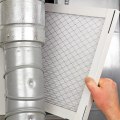
Locate your filter cabinet near the indoor air handler
Turn off your HVAC system before opening the cabinet
Note the airflow arrow printed on the filter frame
Slide the filter in with the arrow pointing toward the blower
Secure the cabinet door completely to prevent air bypass
Record the installation date for future reference
Air leaks around improperly seated filters allow unfiltered air into your system—and your nursery. We've found loose cabinet doors and incorrect arrow orientation on roughly one-third of the systems we inspect.
When to Replace Your Filter
Calendar schedules provide rough guidance, but actual conditions vary.
Check your filter sooner if:
You have multiple pets in the home
Laundry frequency increased with your newborn
Recent construction or renovation occurred nearby
Pollen seasons seem heavier than usual
You notice reduced airflow from vents
Hold the filter up to light. If you can't see through the media, replacement time has arrived—regardless of how many months have passed.
Pairing Filtration with UV Light Protection
MERV 11 filtration captures particles but doesn't neutralize biological contaminants. For comprehensive nursery protection, many Pembroke Pines parents combine Electro-Air 16x25x5 air filters with UV light installation inside the air handler.
UV-C light neutralizes mold, bacteria, and viruses that pass through or colonize on filter surfaces. Together, these systems create layered defense for your newborn's breathing environment.
"Parents ask us all the time what's really in their air. We show them what we pull from their dryer vents—lint loaded with dust mites, pet dander, and mold spores—and explain that those same particles cycle through their HVAC system into the nursery. The Electro-Air 16x25x5 catches what standard filters miss. After 20+ years servicing Pembroke Pines homes, I've watched families switch to 5-inch media filters and come back saying their newborn sleeps better, congestion cleared up, and dust stopped collecting on the crib rails within a week. That's not marketing. That's what we see in the field."
Essential Resources on Electro-Air 16x25x5 Air Filters
We recommend these resources to every Pembroke Pines parent asking about nursery air quality. Federal agencies and pediatric health organizations confirm what we observe during service calls—proper filtration makes a measurable difference in homes with newborns.
1. Understand How MERV Ratings Protect Your Baby
Source: U.S. Environmental Protection Agency
When parents ask why we recommend MERV 11 over standard filters, we point them here first. The EPA breaks down exactly which particle sizes each MERV rating captures. After years of pulling contaminated debris from dryer vents and seeing the same particles circulate through HVAC systems, this chart validates what our technicians witness in the field.
URL: https://www.epa.gov/indoor-air-quality-iaq/what-merv-rating
2. Choose the Right Air Cleaner for Your Home
Source: U.S. Environmental Protection Agency
This federal guide covers filter sizing, CADR ratings, and room-by-room recommendations. We've used these guidelines to help South Florida homeowners select appropriate filtration for decades. The EPA's sizing charts align with what we see working effectively in local homes—and what fails when undersized.
URL: https://www.epa.gov/indoor-air-quality-iaq/guide-air-cleaners-home
3. Learn What Pediatricians Recommend for Nursery Air Quality
Source: American Academy of Pediatrics
The AAP confirms HEPA filtration reduces indoor particulate matter by 25% to 50%. In our experience, families who upgrade to media filters like the Electro-Air 16x25x5 report similar improvements—less dust accumulation, fewer congestion issues, cleaner surfaces in the nursery. This clinical guidance matches what Pembroke Pines parents tell us after making the switch.
4. Follow Lung Health Expert Recommendations on Filtration
Source: American Lung Association
The American Lung Association recommends MERV 13 filters when systems can accommodate them. We've found that many South Florida HVAC systems handle MERV 11 more efficiently without airflow restriction—especially in older homes. This resource helps parents understand the tradeoffs we discuss during consultations.
URL: https://www.lung.org/clean-air/indoor-air/protecting-from-air-pollution/air-cleaning
5. Review Technical Research on Residential Air Cleaners
Source: U.S. Environmental Protection Agency
For parents who want the science behind our recommendations, this 50-page technical document delivers. It covers filtration technologies, health intervention studies, and effectiveness data. Our team references this research when explaining why 5-inch media filters outperform 1-inch disposables—the surface area and particle capture rates speak for themselves.
6. See What Research Shows About Nursery Air Pollution
Source: National Institutes of Health (PMC)
This peer-reviewed study measured actual pollutant levels in infant nurseries and found concentrations exceeding health guidelines. We see the same pattern during inspections—homes with newborns often have higher particle loads from increased laundry, bedding changes, and foot traffic. The research confirms why enhanced filtration matters most during those first months.
URL: https://pmc.ncbi.nlm.nih.gov/articles/PMC3290986/
7. Get Parent-Friendly Guidance on Air Quality and Child Health
Source: HealthyChildren.org (American Academy of Pediatrics)
Written for parents rather than clinicians, this AAP resource explains how air pollution affects developing lungs. When families ask us why nursery air quality deserves extra attention, we share this page. It answers the questions we hear most often—and supports the filtration upgrades we recommend after seeing what accumulates in South Florida homes.
URL: https://www.healthychildren.org/English/news/Pages/Air-Pollution-Childrens-Health.aspx
Our Recommendation
Start with resources 1 and 3 if you're short on time. The EPA's MERV breakdown and the AAP's clinical guidance cover the essentials. For parents wanting deeper understanding, the technical PDF in resource 5 explains exactly why we trust 5-inch media filters over standard 1-inch options in every nursery we service across Pembroke Pines.
Questions about which filter fits your system? Our technicians can assess your HVAC setup and recommend the right solution during any scheduled service call.
Supporting Statistics
Federal research confirms what our technicians document across Pembroke Pines every week. These numbers put data behind patterns we've observed for over two decades.
Indoor Pollutants 2 to 5 Times Higher Than Outdoor Levels
Source: U.S. Environmental Protection Agency
What EPA found:
Indoor pollutant concentrations routinely exceed outdoor levels by 2 to 5 times
During certain activities, levels spike to 100 times outdoor concentrations
This pattern holds regardless of whether homes are in rural or industrial areas
What we see in the field:
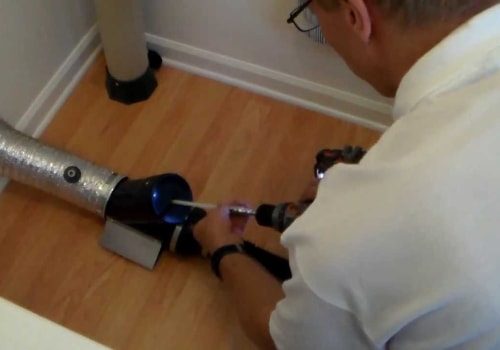
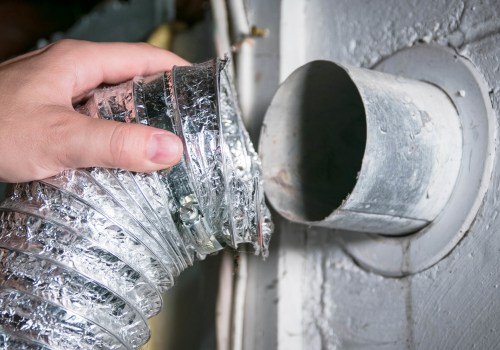
Years ago, we started photographing dryer vent extractions. The debris told a story:
Lint clumps loaded with dust mites
Pet dander woven into fabric fibers
Mold spores thriving in humid exhaust lines
Parents asked the obvious question: where else is this stuff? The answer led us to HVAC systems. The same particles we pull from dryer vents circulate through ductwork and redistribute into nurseries.
Why MERV 11 matters: Standard 1-inch filters catch large debris but let fine particles cycle repeatedly. The Electro-Air 16x25x5 captures particles down to 1.0 micron—the size range concentrated in South Florida homes.
URL: https://www.epa.gov/indoor-air-quality-iaq/inside-story-guide-indoor-air-quality
Newborns Breathe 40 to 60 Times Per Minute
Source: National Institutes of Health (PMC)
What research shows:
Newborns breathe at a median rate of 44 breaths per minute at birth
Rate declines to 26 breaths per minute by age two
Adults average just 12 to 20 breaths per minute
What this means for nursery air:
Infants cycle three times more air through developing lungs every hour than parents in the same room. Every particle passing through an inadequate filter gets inhaled more frequently by the person least equipped to handle it.
How this changed our recommendations:
A Pembroke Pines mother asked why her pediatrician emphasized nursery air quality. We found the answer in respiratory rates. Now we recommend 5-inch media filters as standard practice for homes with newborns—not optional upgrades.
URL: https://pmc.ncbi.nlm.nih.gov/articles/PMC3789232/
Americans Spend 90% of Time Indoors
Source: U.S. Environmental Protection Agency
The numbers:
Average American: 90% of time indoors
Newborns in first months: closer to 100%
The disconnect we encounter:
One Pembroke Pines father invested in a high-end outdoor air quality monitor for their patio. Meanwhile, his HVAC system ran a fiberglass filter rated below MERV 4. His newborn never went outside but breathed unfiltered indoor air around the clock.
The reframe:
Your HVAC filter processes more air affecting your baby's health than any outdoor environmental factor. Outdoor pollution gets headlines. Indoor pollution gets ignored—despite your baby breathing indoor air nearly every minute of every day.
URL: https://www.epa.gov/report-environment/indoor-air-quality
HEPA Filtration Reduces Particulate Matter 25% to 50%
Source: American Academy of Pediatrics
What AAP documented:
Portable HEPA purifiers reduce indoor particulate matter by 25% to 50%
Enhanced filtration decreases asthma symptoms in children
Air cleaners require regular maintenance to function properly
What parents told us first:
For years, families reported the same improvements after filter upgrades:
Less dust accumulating on crib rails and furniture
Fewer nighttime congestion episodes
Cleaner nursery environments overall
The AAP research validated what we'd heard anecdotally. Clinical data aligned precisely with family feedback.
The principle: Higher efficiency filtration means fewer particles reaching your family. MERV 11 captures what MERV 4 fiberglass filters let pass.
Children Spend 80% to 90% of Time Indoors
Source: American Academy of Pediatrics
What most filtration guides miss:
Homes with newborns generate more airborne particles than average households.
The laundry connection:
More laundry loads with a new baby
More bedding changes throughout the day
More fabric fibers releasing with every wash cycle
Our dryer vent technicians noticed heavier lint accumulation in homes with infants long before we connected it to HVAC performance. The increased laundry load sends more particles into circulation—exactly when protection matters most.
Why 5-inch filters handle this better: Expanded surface area absorbs the increased particle demand. Standard 1-inch filters clog faster under newborn household conditions.
Key Takeaways for Nursery Filtration
Why the Electro-Air 16x25x5 Addresses Each Pattern
MERV 11 efficiency – Captures particles down to 1.0 micron
5-inch media depth – Holds debris that clogs 1-inch filters in weeks
Extended lifespan – 6 to 12 months under normal conditions
South Florida adjustment – Check every 4 months given year-round HVAC usage
Consistent protection – No monthly filter changes disrupting performance
We've recommended this filter to hundreds of Pembroke Pines families preparing nurseries. The feedback stays consistent: visible improvements within the first week and sustained results through the filter's lifespan.
Final Thought & Opinion
After two decades servicing Pembroke Pines homes, we've formed strong opinions about nursery air quality that go beyond manufacturer specifications and federal research.
What This Page Covered
Why nursery air matters – Infants breathe 40 to 60 times per minute through developing lungs
What standard filters miss – 1-inch disposables let fine particles cycle repeatedly
How 5-inch media filters differ – Greater surface area, longer lifespan, finer particle capture
What federal research confirms – Indoor pollutants exceed outdoor levels by 2 to 5 times
What our field work adds – Contaminants in dryer vents circulate through HVAC into nurseries
Data tells part of the story. Twenty years of inspections tell the rest.
Our Honest Assessment
The filter protecting your nursery matters more than most parents realize—and less than filter marketing suggests.
Families achieving the best nursery air quality don't just install premium filters. They address the complete picture:
Source control comes first. No filter compensates for smoking indoors, visible mold, or poorly maintained HVAC systems. The Electro-Air 16x25x5 captures particles—it doesn't eliminate sources.
Installation matters as much as the filter. We find problems on roughly one-third of inspections:
Improperly seated filters
Backwards airflow arrows
Loose cabinet doors allowing bypass
Replacement schedules need local adjustment. Manufacturer guidelines assume moderate climates. South Florida systems run 10+ months annually. Check every 4 months regardless of packaging recommendations.
The dryer vent connection is real. Every nursery laundry load releases fabric fibers. Clogged dryer vents push lint into living spaces and HVAC circulation. We've seen families upgrade filters while ignoring restricted vents—addressing half the problem.
UV light creates layered protection. MERV 11 captures particles but doesn't neutralize biological contaminants. For comprehensive protection, combine the Electro-Air 16x25x5 with UV-C light installation inside the air handler.
Why Our Perspective Differs
Most filtration guides come from filter manufacturers or general wellness websites. They discuss specifications and cite EPA statistics.
We approach this differently because we see what accumulates in homes—not just what filters claim to capture.
What dryer vent work taught us:
The lint, dust mites, pet dander, and mold spores we extract represent concentrated samples of what circulates through every room. When parents see photographs of their dryer vent debris, they stop asking whether enhanced filtration matters.
Why we recommend this specific filter:
We don't sell filters. We recommend based on what performs in Pembroke Pines homes with:
High humidity year-round
HVAC systems running 10+ months annually
Elevated particle loads from South Florida conditions
The Electro-Air 16x25x5 handles these demands without restricting airflow or requiring monthly replacement.
What parents consistently report:
Less dust on crib rails within days
Fewer overnight congestion episodes within weeks
Cleaner nursery surfaces sustained over months
The AAP's 25% to 50% particulate reduction data matches what families describe—and what we observe on follow-up service calls.
What We Tell Every Parent Preparing a Nursery
Start with the filter. Don't stop there.
The Electro-Air 16x25x5 provides meaningful protection:
MERV 11 captures particles down to 1.0 micron
5-inch depth holds debris that overwhelms standard filters
Extended lifespan delivers consistent performance
Address these alongside your filter upgrade:
The Bottom Line
Your newborn breathes approximately 40 times per minute in a nursery where indoor pollutants likely exceed outdoor levels by 2 to 5 times.
The Electro-Air 16x25x5 handles that responsibility effectively. We've recommended it for years because it performs—not because it's the most expensive option or the easiest sale.
Three commitments that deliver results:
Install it correctly
Check it regularly
Address the sources and systems around it
Do those things and nursery air quality improves measurably within the first week.
That's not marketing. That's what we see in the field.
Questions About Nursery Air Quality?
Our technicians assess HVAC systems and filtration during every scheduled service call. We'll tell you what we find, recommend what works, and explain why—whether that means upgrading your filter, cleaning your dryer vent, or both.
FAQ on "Electro-Air 16x25x5 Air Filters"
Q: What MERV rating is the Electro-Air 16x25x5 air filter?
A: MERV 11. Captures particles down to 1.0 micron including:
Dust and dust mites
Pollen and mold spores
Pet dander
Fabric fibers
Our field insight: MERV 11 hits the sweet spot for South Florida systems. We've seen MERV 13 filters restrict airflow in older equipment. Higher ratings mean nothing if your system can't push air through.
Q: How often should I replace my Electro-Air 16x25x5 filter?
A: Check every 4 months in South Florida. Manufacturer guidelines assume moderate climates.
Why local conditions matter:
South Florida HVAC runs 10+ months annually
We've pulled 5-month filters that looked like 12-month filters
Homes with pets or nurseries should inspect monthly
Our rule: Trust your eyes over the calendar. Gray, matted media means replacement time.
Q: What systems are compatible with Electro-Air 16x25x5 filters?
A: Most 16" x 25" x 5" media cabinets including:
Electro-Air air cleaners
Honeywell F100 and F200 series
Lennox X6670 compatible units
Carrier FILCCCAR0016 housings
Common problem we encounter: Wrong filter sizes creating bypass gaps. Close enough doesn't work. Unfiltered air finds every opening. Measure your cabinet before ordering.
Q: What's the difference between Electro-Air 16x25x5 and standard 1-inch filters?
A: Surface area and longevity.
What we observe: 1-inch filters in South Florida saturate within weeks. Homeowners assume protection exists because a filter is present. Meanwhile, particles cycle continuously. The 5-inch depth handles the load our climate demands.
Q: Can the Electro-Air 16x25x5 help with nursery air quality?
A: Yes. MERV 11 captures fine particles affecting infant respiratory health.
What parents report:
Less crib dust within days
Fewer congestion episodes within weeks
Cleaner surfaces sustained over months
Our unique perspective: Dryer vent cleaning taught us how nursery laundry contributes to particle loads. Every wash releases fabric fibers. If your vent restricts airflow, lint enters HVAC circulation.
Best results: Combine the Electro-Air 16x25x5 with dryer vent cleaning and UV light installation for comprehensive nursery air protection.
Learn more about HVAC Care from one of our HVAC solutions branches…
Filterbuy HVAC Solutions - Miami FL - Air Conditioning Service
1300 S Miami Ave Apt 4806 Miami FL 33130
(305) 306-5027
https://maps.app.goo.gl/Ci1vrL596LhvXKU79